Let's Get That Pending Article Published To The World
For Adverts and Enquiries
Phone: 234 903 352 3975
Email: triplenetblogs@gmail.com

Let's Get That Pending Article Published To The World
For Adverts and Enquiries
Phone: 234 903 352 3975
Email: triplenetblogs@gmail.com




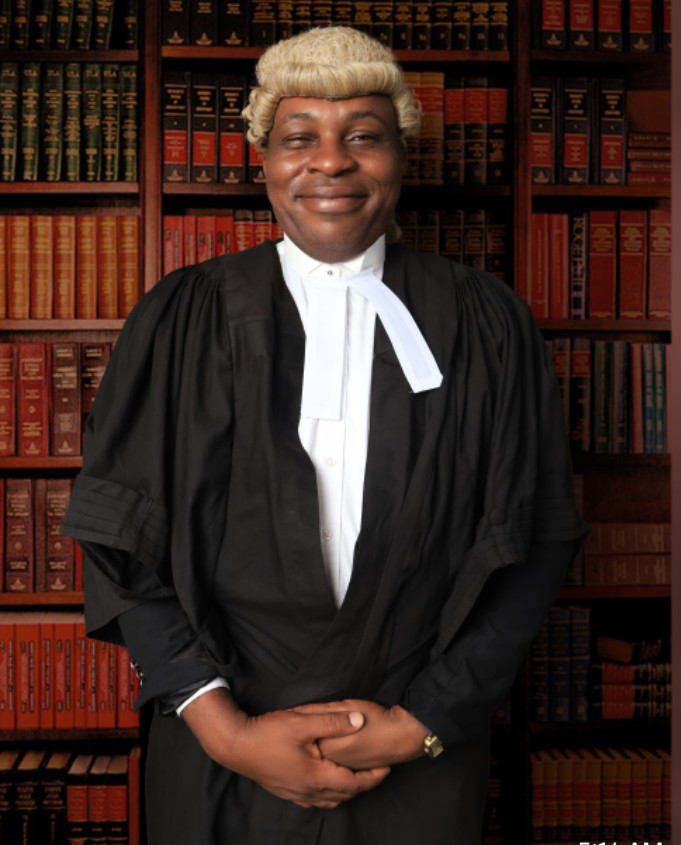
By: Douglas Ogbankwa Esq. douglasogbankwa@gmail.com
Powered by the Vanguard for the Independence of the Judiciary
Judicial recusal is anchored in the twin pillars of Natural Justice and Section 36(1) of the 1999 CFRN (as amended), which mandates that a court must be independent and impartial:
Nemo judex in causa sua: No one shall be a judge in his own cause.
Audi alteram partem: Hear the other side.
Proof of actual bias is completely unnecessary; the mere reasonable apprehension of bias by an observer is the threshold.
Deduwa v. Okorodudu (1976) 10 SC 329: Justice must not only be done, but must be seen to be done.
Metropolitan Properties v. Lannon (1969) 1 QB 577: Adopted in Nigeria via Adegoke Motors v. Adesanya (1989): The test is whether a fair-minded observer would conclude there was a real possibility of bias.
Core Judicial Authorities
Okoduwa v. State (1988) 2 NWLR (Pt. 76) 333: If there is a real likelihood of bias, a judge is under a strict legal obligation to recuse himself.
Rashidi v. Ministry of Health (1990) 2 NWLR (Pt. 133) 144: Even the slightest doubt as to a judge’s impartiality warrants recusal.
Womiloju v. Anibire (2010) 8 NWLR (Pt. 1195) 1: Bias, actual or apparent, completely vitiates all judicial proceedings.
Udo v. State (2016) 15 NWLR (Pt. 1536) 1: Apprehension of bias by a reasonable observer is enough; subjective proof of bias is not required.
Dimes v. Grand Junction Canal (1852) 3 HL Cas 759: Any pecuniary (financial) interest, no matter how microscopic, leads to automatic disqualification.
R v. Barnsley Licensing Justices (1960) 2 QB 167: Prejudging an issue destroys public confidence.
*The Procedural Shift and Fatal Consequence*
The Judge Becomes a Party: Once recusal is applied for, the judge ceases to be a neutral arbiter on that issue and effectively becomes a party defending his right to sit. Therefore, clear reasons must be given for any refusal (Adegoke Motors).
Absolute Nullity: Refusal without cogent reasons raises a presumption of bias. Under Adegoke Motors, failure to recuse strips the court of jurisdiction and renders the entire proceedings a nullity ab initio.
Immunity to Merits on Appeal: Appellate courts will set aside the judgment purely on the breach of fair hearing, the substantive merits of the case will not even be considered.
Recusal is not a personal attack; it is constitutional hygiene. As Lord Denning famously noted: “Justice is rooted in confidence, and confidence is destroyed when right-minded people go away thinking the judge was biased.” A judge who refuses to step aside wounds the integrity of the entire judiciary.






 3913
3913
©www.triplenet.com.ng/lawparliament
All right Reserved